Visibility First
Most companies have no idea what data is flowing into AI tools. We start by surfacing actual usage so you're governing reality, not guesswork.
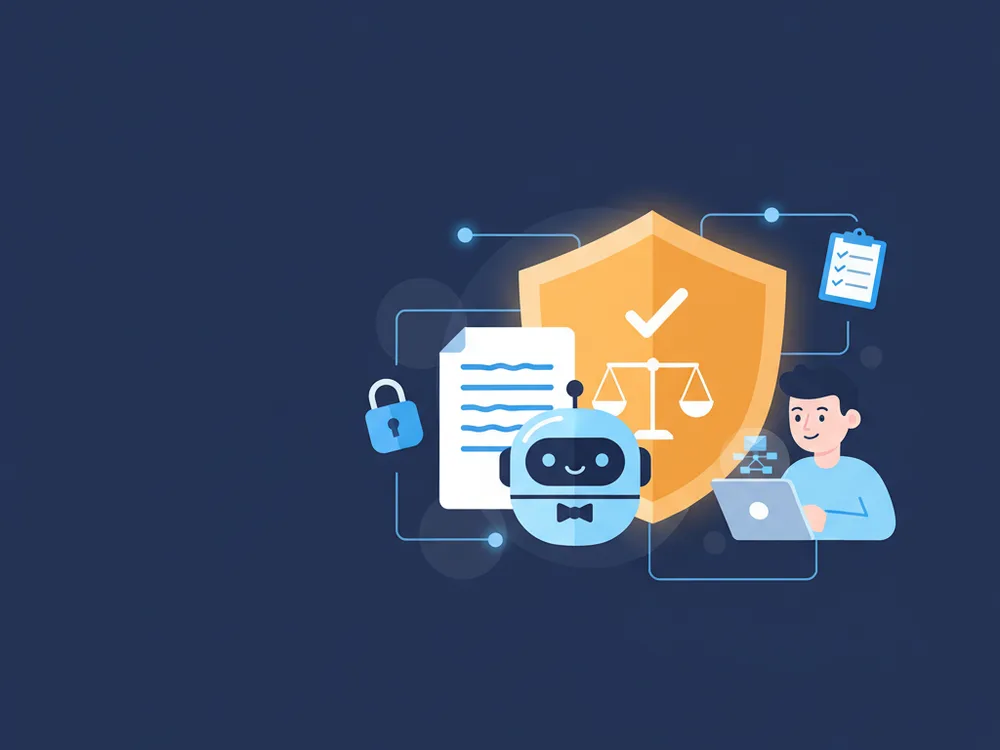
Practical policies and oversight so your team can use AI confidently — without creating compliance gaps, shadow-AI risk, or data exposure you can't see.
Not a 90-page binder nobody reads. A lightweight, enforceable framework sized to your risk profile.
Most companies have no idea what data is flowing into AI tools. We start by surfacing actual usage so you're governing reality, not guesswork.
We map AI policies to the frameworks you already answer to — HIPAA, CMMC, SOC 2, PCI DSS — so AI usage closes gaps instead of opening new ones.
Governance keeps humans responsible for AI-influenced decisions. The tool assists; a named person still owns the outcome.
The policies, processes, and accountability structures around how your organization uses AI.
Clear rules for employees and departments on what AI tools are approved and how to use them.
Privacy and data-handling rules for AI systems so sensitive information doesn't leak into public tools.
Criteria for assessing AI tools and platforms before they enter your environment.
A repeatable process for evaluating AI-driven decisions and their potential impact.
Policies mapped to industry regulations including HIPAA, CMMC, and PCI DSS.
Defined response steps for AI-related issues, with documentation for audits.
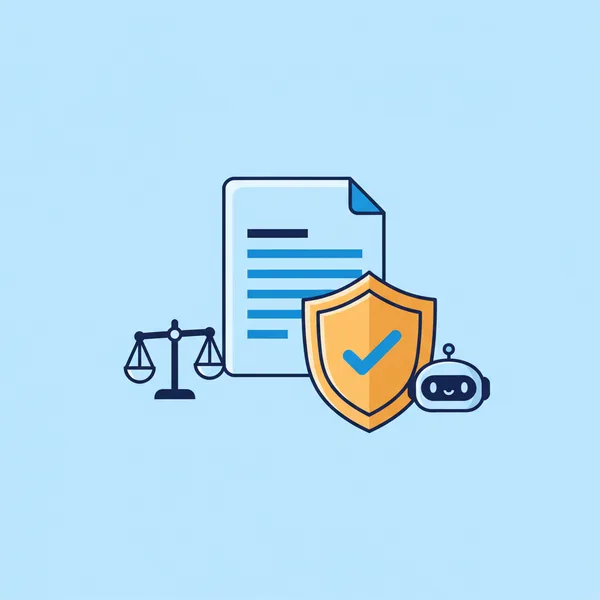
Bringing AI into your business requires more than just installing tools. Without clear policies and oversight, companies face regulatory risk, inconsistent usage, and erosion of trust from employees and customers. RNITS helps organizations establish AI governance frameworks that balance innovation with accountability.
Most businesses start using AI tools informally — individual employees experiment with ChatGPT, teams adopt point solutions, and suddenly there is no visibility into what data is being processed or what decisions are being influenced by AI.
We help address the issues that follow: shadow AI usage across departments with no oversight, unclear ownership of AI-related decisions and outcomes, missing documentation for regulatory or audit purposes, vendor contracts that don’t address AI-specific data handling, and employee uncertainty about which tools are actually approved.
This work usually connects with existing cybersecurity compliance and data-protection efforts your organization may already have in place.
We work alongside your leadership and IT teams to build governance that fits your organization’s size and risk profile — not a one-size-fits-all binder. That means inventorying current AI usage to find the gaps, drafting practical policies employees can follow, connecting governance to AI training programs so staff understands the rules, and holding quarterly check-ins to update policies as AI capabilities and regulations change.
Throughout, the principle stays the same: AI assists human judgment, it does not replace it. Governance keeps a named person accountable for every AI-influenced decision.
AI governance is relevant for any business adopting AI tools, but it is especially critical for regulated industries — healthcare, defense contracting, financial services, and legal. If your organization handles sensitive data or operates under requirements like HIPAA or SOC 1/SOC 2, AI governance is not optional.
Built alongside your leadership and IT teams — not handed down as a template.
We inventory current AI usage across departments and identify the gaps and shadow-AI risks.
We draft practical, readable policies your employees can actually follow day to day.
We communicate the policies and connect them to AI training so staff understands the rules behind the tools.
We revisit the framework as AI capabilities and regulations evolve, keeping it current.
AI governance is a framework of policies, processes, and accountability structures that guide how your organization adopts and uses AI. Without it, businesses face regulatory risk, inconsistent tool usage, and potential data exposure from unmanaged AI adoption.
Most small to mid-size businesses can have a practical governance framework in place within 4 to 8 weeks. This includes an AI usage audit, policy drafting, employee communication, and an initial training session.
Yes. Even limited AI usage can create compliance gaps, especially in regulated industries. A lightweight governance framework ensures your team uses approved tools, handles data properly, and has clear guidelines before usage grows.
AI governance directly supports compliance by ensuring AI tools meet data handling and privacy requirements. For CMMC, HIPAA, or SOC 2 environments, AI governance fills gaps that traditional compliance frameworks were not designed to address.
Upskill your team on AI tools and workflows. RNITS offers practical AI training for non-technical staff — prompt engineering, AI-assisted productivity, and more.
Plan and implement AI solutions across your business. RNITS handles AI readiness assessments, vendor selection, integration, and ongoing management.
Identify and automate repetitive business tasks with AI. RNITS helps you save time and reduce errors with intelligent automation solutions.
Headquartered in Tyngsboro, MA. Onsite support within 150 miles, remote support available in our target markets nationally.
If you are comparing providers or planning your next step, RNITS can help you sort out the work and the order it should happen in — zero obligation.