Right System, Right Place
We sort workloads into what should stay, what should move, and what needs a stronger connection — so each system lives where it performs and costs best.

Loading…
Keep the systems that still make sense on-premises, use the cloud where it adds flexibility and resilience — designed as one deliberate strategy, not a patchwork of separate tools.
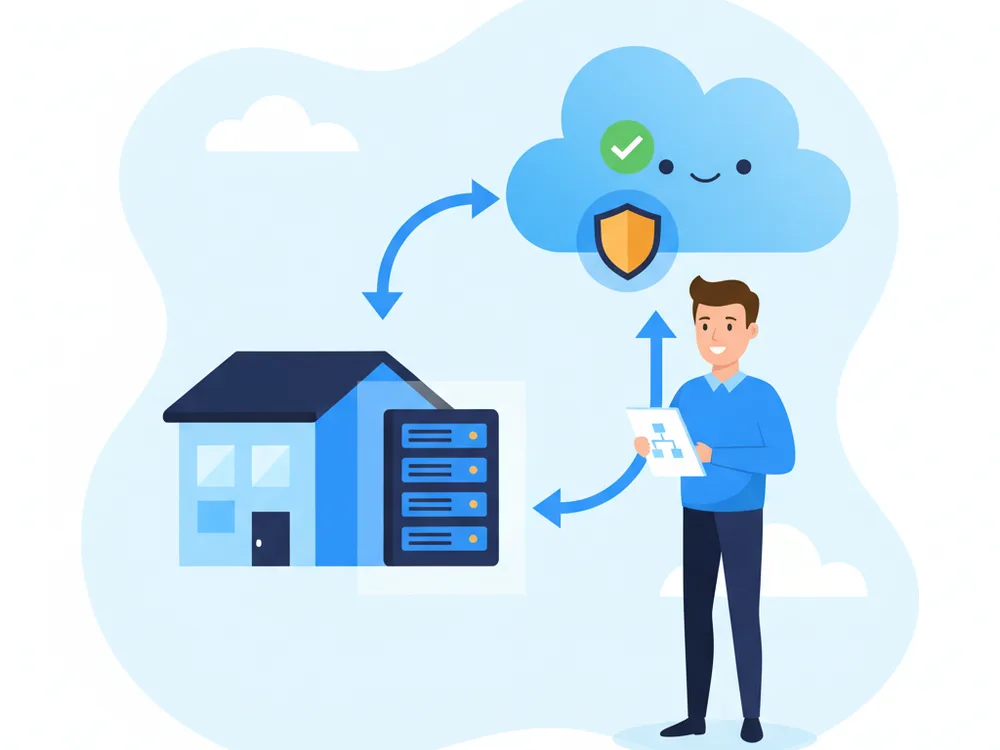
For many businesses, hybrid is not a temporary stopgap — it is the right operating model. Some systems stay local for performance or compliance; others belong in the cloud.
We sort workloads into what should stay, what should move, and what needs a stronger connection — so each system lives where it performs and costs best.
Use the cloud where it adds flexibility and resilience without a risky full cutover, keeping systems that still work right where they are.
Shared security, access, and monitoring policies across local and cloud assets, so a split environment doesn't mean split responsibility.
Local infrastructure and cloud services combined in a way that keeps users productive and data flows manageable.
On-premises servers connected to cloud services so users move between them without friction.
Microsoft 365 or Google Workspace tied to local identity and file systems for one consistent sign-on and access model.
Cloud backup and disaster recovery layered onto local workloads, so on-prem systems are protected too.
Access, monitoring, and security baselines applied consistently across both environments.
A roadmap for systems that are not ready to move yet, instead of leaving them stranded.
Coordinated monitoring so responsibility split between local and cloud resources never becomes a blind spot.
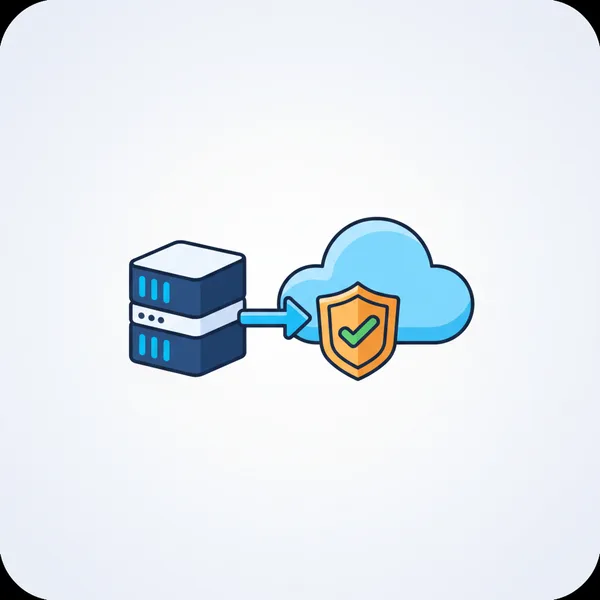
Hybrid cloud solutions let businesses keep the systems that still make sense on-premises while using cloud services where they add flexibility, resilience, or lower overhead. RNITS helps clients design and support hybrid environments that are easier to manage than a rushed all-in cloud move.
For many businesses, hybrid is not a temporary compromise. It is the right operating model. Some applications stay local for performance or compliance reasons, while email, collaboration, backup, and selected workloads move to the cloud.
Hybrid gives you more flexibility than an all-local environment without forcing a complete rebuild of systems that still work. Clients choose it for gradual modernization instead of a risky cutover, better support for remote users and multiple offices, stronger backup and disaster recovery options, and cost control for workloads that do not belong in the public cloud — often alongside compliance requirements that keep some systems local.
This service works alongside cloud migration services, cloud backup solutions, cloud infrastructure management, and Microsoft 365 managed services.
With RNITS, hybrid cloud becomes a deliberate strategy instead of a patchwork of separate tools. Clients get clearer ownership, smoother user access, and a roadmap that reflects budget realities as well as technical needs. That is often the difference between a hybrid environment that helps the business and one that creates constant support friction.
If your business needs the flexibility of the cloud without walking away from important on-premises systems, we can help you build a hybrid model that works in practice.
From scattered tools to a deliberate, supportable architecture.
We sort workloads into what should stay, what should move, and what needs a stronger local-to-cloud connection.
Architecture planning, dependency review, and identity and access design built around real performance and compliance needs.
Connectivity, monitoring, backup, and a security baseline aligned across cloud and on-premises assets.
Steady support and a roadmap that reflects budget realities as well as technical needs.
It is a mix of on-premises infrastructure and cloud services managed as part of one operating environment, with shared security, access, and monitoring policies.
No. Many small and midsize businesses use hybrid cloud because it lets them modernize gradually instead of forcing a risky full cutover.
Yes. We support hybrid environments that tie Microsoft 365 and other cloud services to local identity and file systems.
Yes — often more coordination than either model alone, because responsibility is split between local and cloud resources and the seams are where problems hide.
Protect critical data with policy-driven cloud backup solutions. RNITS ensures availability, regulatory alignment, and fast recovery for your organization.
Optimize cloud performance and costs with structured infrastructure management. RNITS delivers visibility, governance, and scalability across cloud platforms.
Move applications and data to the cloud with minimal disruption. RNITS provides controlled, predictable cloud migration for enterprise environments.
Keep Gmail, Drive, and Google Workspace running securely and efficiently. RNITS manages administration, security policies, and user lifecycle at scale.
Maximize Microsoft 365 security, governance, and performance. RNITS provides structured managed services across Exchange, Teams, SharePoint, and Entra ID.
Headquartered in Tyngsboro, MA. Onsite support within 150 miles, remote support available in our target markets nationally.
If you are comparing providers or planning your next step, RNITS can help you sort out the work and the order it should happen in — zero obligation.